Dried Fruit vs Candy: The Better Sweet Snack
Dried fruit vs candy is not a simple sugar question. See how ingredients, portions, fiber, and everyday choices shape smarter sweet snacks at home, too.
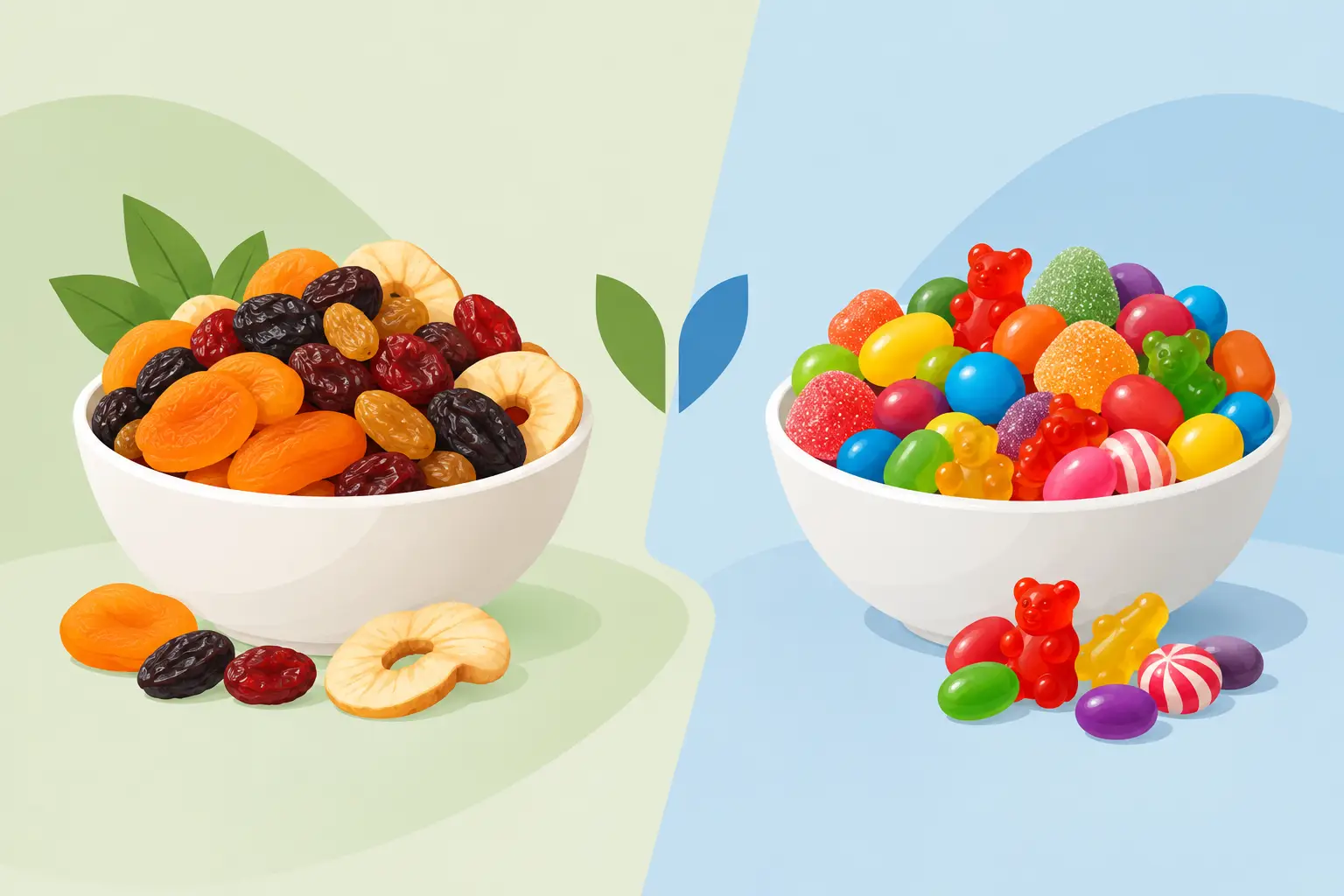
That 3 p.m. craving is real. When you want something sweet, the choice between dried fruit vs candy can feel obvious - until you turn the package around. Both can contain sugar. Both are convenient. Both can be easy to overeat. But their ingredients, nutritional value, and role in your routine are very different.
The goal is not to make candy forbidden or turn every snack into a nutrition test. It is to choose sweets with intention. A clean dried fruit snack can bring the naturally sweet taste of whole fruit, plus fiber and plant-based nutrients, in a format that works at your desk, in a gym bag, or on the road. Candy is often designed for a different purpose: maximum sweetness, flavor intensity, and shelf appeal.
Dried Fruit vs Candy: What Is Actually Different?
At its simplest, dried fruit is fruit with most of its water removed. Dates, mango, pineapple, berries, apples, and raisins become smaller, chewier, and more concentrated as they dry. When the ingredient list says only the fruit itself, you know exactly what you are eating.
Candy is typically made from added sugars or syrups, often with flavorings, colors, acids, starches, oils, or gelatin. There are exceptions on both sides. Some fruit snacks are essentially candy with fruit juice or puree in the formula. Some dried fruit is sweetened with sugar, glazed, fried, or made with preservatives. The front of the package may say fruit, but the ingredient panel tells the real story.
That is why ingredient transparency matters. Look for recognizable, minimal ingredients and be clear about what you want from your snack. If you want a simple, naturally sweet whole-food option, choose dried fruit with nothing to hide.
Sugar Is Not the Whole Story
It is fair to notice the sugar content in dried fruit. Drying removes water, not the fruit's naturally occurring sugars, so a small handful can contain more sugar than the same volume of fresh fruit. This is where portion awareness makes a difference.
Still, naturally occurring sugar in unsweetened dried fruit comes with a different food matrix than the added sugar in most candy. Fruit also provides fiber and naturally occurring compounds found in plants. Fiber can help make a snack feel more satisfying and supports healthy digestion as part of a balanced diet.
Candy generally offers quick sweetness with little staying power. A few pieces may satisfy a taste craving, but they are less likely to carry you through an afternoon of meetings, a school pickup, or a post-workout commute. Pairing dried fruit with a protein or fat source can make the difference even clearer. Try a few dates with almonds, dried apple slices with nut butter, or unsweetened dried berries stirred into Greek yogurt.
This does not mean dried fruit has a free pass. A cup of dried fruit is still a lot of concentrated fruit sugar, even when it is made from one clean ingredient. A sensible serving is often a small handful, then adjust based on the fruit, your overall meal pattern, and your personal nutrition needs.
Why Processing Changes the Choice
Not all processing is the same. Dehydration is a preservation method that removes moisture so fruit can last longer without relying on a long list of additives. It also creates a portable snack that is easy to keep where healthy choices often matter most: your car, work drawer, pantry, or travel bag.
The quality of that process matters. Low-temperature dehydration can help preserve the fruit's character, color, and natural flavor while creating a satisfying chewy or crisp texture. It is a practical way to enjoy more variety when fresh fruit is not available or convenient.
By contrast, highly manufactured candy often begins with refined sweeteners and added ingredients that build its flavor, texture, and appearance. There is nothing confusing about that. Candy is a treat. It can fit into a balanced life, especially when you truly want it and enjoy it without guilt. It just should not be mistaken for a fruit serving because the package shows a strawberry or uses words like fruit-flavored.
How to Spot a Better Dried Fruit Snack
The best choice starts with a quick label check. A short ingredient list is usually a strong sign. For a pure dried fruit product, the ideal list may contain one ingredient: the fruit named on the front.
Watch for added cane sugar, syrup, oil, artificial colors, and preservatives if your goal is a clean-label snack. Added sugar can be especially common in dried cranberries, tropical fruit, and fruit strips. Sweetened options are not automatically off limits, but they are closer to a dessert choice than an everyday fruit snack.
Texture can also offer a clue, although it is not a rule. Fruit that is exceptionally glossy, candy-like, or brightly colored may have added ingredients. Read the label rather than guessing. The product should make it easy to understand what is inside.
At Just Naturals Superfoods, we believe simple ingredients support simple decisions. When a snack is made from real fruit, you should not need a chemistry lesson to recognize it.
When Candy May Be the Better Choice
This may sound surprising, but sometimes candy is the more honest choice. If you are craving chocolate, gummy candy, or a favorite seasonal treat, eating a modest portion and enjoying it can be more satisfying than trying to force dried fruit to do a different job.
The issue is not candy itself. The issue is relying on candy as your default snack when you need steady energy or reaching for fruit-flavored candy under the impression that it offers the same benefits as fruit. Let treats be treats. Let nourishing snacks do more of the everyday work.
For people managing blood sugar, digestive concerns, food allergies, or a specific nutrition plan, both dried fruit and candy may require a more personalized approach. Dried fruit can be a concentrated carbohydrate source, and certain fruits may not feel right for every person. A registered dietitian or qualified health professional can help you choose portions and snack combinations that fit your needs.
Make the Sweet Choice Easier
A better routine is usually built before the craving hits. Keep a few clean snack options visible and ready to grab. Unsweetened dried fruit works well in a pantry container, lunchbox, or portioned snack bag. It can also add natural sweetness to oatmeal, trail mix, yogurt, salads, and homemade energy bites.
For more staying power, combine it with another whole-food staple. A small serving of dried mango with pumpkin seeds, raisins with walnuts, or dates with a spoonful of nut butter can turn a sweet bite into a more balanced snack. If you are active, this combination can be especially useful before or after movement when convenience matters.
Parents can use the same approach without creating rigid food rules. Offer dried fruit alongside cheese, seeds, yogurt, or a favorite protein at snack time. Keep candy for celebrations and occasional enjoyment instead of presenting it as the only exciting sweet option. Kids learn food confidence when they see that sweet flavors can come from real ingredients, too.
The Better Sweet Snack Depends on the Moment
Dried fruit vs candy is not about declaring one food good and the other bad. It is about understanding what each choice gives you. Candy delivers a treat experience. Unsweetened dried fruit delivers naturally sweet flavor in a whole-food format, with fiber and plant-based nutrition that can better support an everyday routine.
Read the label, honor your cravings, and keep portions realistic. When you want sweetness that brings something more to the table, choose fruit that is simply fruit.
Fuel Your Wellness with 100% Pure Plant Nutrition
Discover our pure, gently dehydrated fruit & vegetable powders, herbal blends, and whole-food snacks with zero added sugar or artificial fillers.